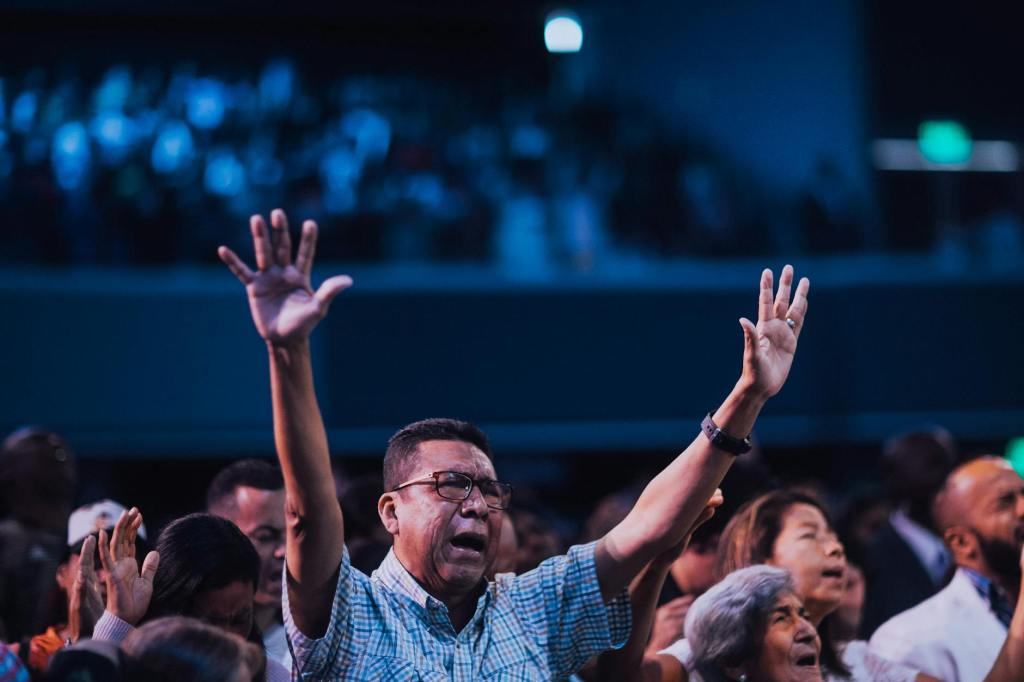
“Do you go to church?”
It’s a question we’ve all heard. Sometimes we’re asking about someone’s spiritual life. Other times, it’s more like asking, “Are you part of a group like mine?”
But what exactly do we mean by “church”?
Is it a building? A local congregation? A denomination? A tax-exempt organization? Or is it something more?
For many, “church” is loaded with assumptions and emotional weight—some rooted in beautiful community, others in past wounds. But if we’re going to walk faithfully as followers of Jesus, we need to clear away the confusion and rediscover what “church” actually means according to Scripture—and what our relationship to it should be.
The Church: The Body of Christ
Let’s start with the clearest and most foundational definition: the Church is the Body of Christ.
1 Corinthians 12:27 says,
“Now you are the body of Christ, and individually members of it.”
The Church—capital “C”—is not a building, a denomination, or a nonprofit. It’s a people. It’s every believer in Jesus Christ, past, present, and future. It spans continents, ethnicities, languages, and cultures.
When you place your faith in Jesus and receive His grace, you don’t just get saved—you get adopted into a family. You become part of something bigger than yourself. And not just in a vague sense. You’re spiritually united with others in Christ, belonging to a body where Jesus Himself is the Head (Colossians 1:18).
This means you can’t “go” to Church in the ultimate sense. You are the Church.
The Local Church: Real People, Real Places
That said, the Bible also emphasizes gathering with a local expression of the Church. When Paul writes letters to the church in Corinth or Ephesus or Philippi, he’s addressing actual communities of believers—real people in real places.
The early Church met in homes. Sometimes in synagogues. Sometimes outside by rivers or in public squares. But wherever they met, the pattern was the same: teaching, prayer, worship, fellowship, communion, and service.
Hebrews 10:24–25 says:
“Let us consider how we may spur one another on toward love and good deeds, not giving up meeting together, as some are in the habit of doing…”
There’s no such thing as a lone-ranger Christian. We need each other. God designed it that way. We grow through community, accountability, encouragement, and the sharpening that comes from being in relationship with people who are not exactly like us.
So yes, we gather. Not to earn points with God, but to remember who we are—and Whose we are.
Denominations, Doctrine, and Diversity
Now here’s where things get complex.
Many local churches are affiliated with denominations—networks of churches that share theological beliefs and structures. These include Baptists, Methodists, Presbyterians, Pentecostals, non-denominationals (which often have their own shared assumptions), and so on.
This isn’t new. From the beginning, believers have wrestled with differences in doctrine, leadership, and practice. Paul even addressed division in the church in Corinth, reminding them, “Is Christ divided?” (1 Corinthians 1:13).
Denominations aren’t inherently bad. They can help clarify theology, support accountability, and organize global missions. But they are human-made, and they’re not the core of what makes a group of believers a Church.
The danger comes when allegiance to a denomination overshadows allegiance to Christ.
When we ask someone what church they go to, what we should be asking is: Where are you in community with other believers who are pursuing Jesus, holding fast to the Word, and living out the Gospel?
Because ultimately, we’re not building brand loyalty—we’re building the Kingdom of God.
Buildings, Sunday Services, and the Language of Religion
Then there’s the church building.
“I’m going to church.”
We say it every week. But again—it’s shorthand. You’re going to a service, a gathering, a building where the Church meets. It’s not wrong to use that phrase. But it’s important to recognize that the building is not the Church. The people are.
Churches that meet in school auditoriums, coffee shops, tents, homes, or cathedrals are no less “church” than ones with stained glass and pews.
What matters is not the structure—it’s the presence of God and the presence of His people, gathered in His name.
We can lose sight of this when we turn “going to church” into a ritual instead of a relationship. When it becomes religious obligation rather than a relational gathering.
God is not impressed by attendance. He’s drawn to hearts that seek Him.
What About the 501(c)(3)?
In the United States, most churches are also registered as 501(c)(3) nonprofit organizations. This status provides tax exemptions and allows them to accept charitable donations legally.
This is a legal structure, not a spiritual one.
It’s important for stewardship, transparency, and financial integrity, especially when a church handles staff, buildings, and resources. But it’s not what defines a Church.
Jesus didn’t register the early Church with Rome.
Your local church’s tax status is helpful for administration—but it has nothing to do with God’s definition of His Church.
So… Do I Have to “Go to Church”?
Here’s the honest answer: You don’t have to “go to church” to be saved. But you do have to be part of the Church to walk in the fullness of what God has for you.
And being part of the Church means more than just saying you believe. It means belonging. It means serving. It means participating.
If you’re not in community with other believers—in a local gathering where you’re being taught, growing in accountability, and living out your faith—you’re missing out.
The Church isn’t perfect. In fact, sometimes it’s painfully messy. But it’s God’s design. His chosen vessel to carry the Gospel and care for His people.
What Should I Look for in a local Church Community?
If you’re searching for a local church to attend or belong to, here are a few key things to look for:
- Christ-Centered Teaching – Is the Gospel clear? Is the Bible taught faithfully?
- Authentic Worship – Is there reverence, joy, and focus on God?
- Biblical Community – Are people living life together, not just attending events?
- Mission-Mindedness – Is the church actively sharing Christ in word and deed?
- Accountability & Discipleship – Are people being discipled? Challenged to grow?
- Love and Grace – Is there humility? Does the church reflect the heart of Jesus?
Don’t get hung up on size, style, or brand. Look for spiritual fruit, not flash.
Final Thoughts
When Jesus said, “I will build My Church,” (Matthew 16:18), He wasn’t talking about an organization, a building, or a denomination.
He was talking about us.
His people.
Called out from the world. United by His Spirit. Set apart to live as lights in the darkness.
You are not just attending church—you’re part of it. You’re the hands and feet of Jesus. You belong to a global, eternal movement that began with an empty tomb and is advancing one soul at a time.
So yes, go to church.
Not because it checks a religious box, but because it reminds you of who you are and where you belong.
Find your place. Use your gifts. Love your brothers and sisters.
Because we—together—are the Church.
 sethmglazier.com
Leave a comment