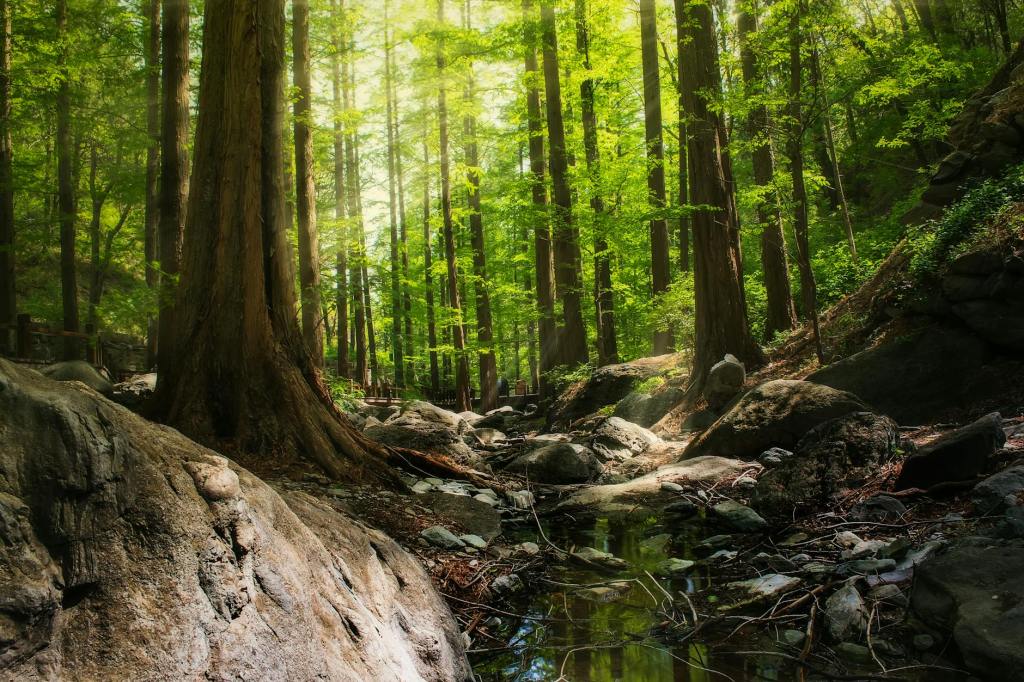
“The heavens declare the glory of God; the skies proclaim the work of his hands.”
— Psalm 19:1
Have you ever stepped outside on a quiet morning, taken a deep breath of fresh air, and felt a peace settle over you? Or paused to admire the intricate detail of a flower, the patient growth of a tree, or the unrelenting rhythm of ocean waves? Nature has a way of speaking—not with words, but with witness.
The Bible is clear: God reveals Himself through creation. Not only does it display His power and creativity, but it teaches us—if we’re willing to listen. While the world often rushes past the natural world to get to the next task or screen, the Christian is invited to notice, wonder, and learn.
Here are several profound lessons we can learn from nature if we’re willing to observe it with spiritual eyes.
1. God Is a Master Artist and Designer
From galaxies to grains of sand, nature reflects intentionality. God didn’t just throw the world together—He formed it with precision, balance, and beauty.
- The Fibonacci sequence in plants.
- The perfect ecosystem cycles in rainforests.
- The diversity of life in oceans, deserts, and skies.
Creation doesn’t exist by accident—it exists by design. And you, too, were designed—not randomly or generically, but intentionally by the same Creator.
“For since the creation of the world God’s invisible qualities… have been clearly seen, being understood from what has been made.” (Romans 1:20)
Nature teaches us that God is not only real, but involved.
2. Seasons Have a Purpose
Nature lives in rhythm—spring, summer, fall, and winter. Each season has its purpose:
- Spring brings new life.
- Summer brings growth.
- Fall brings harvest and change.
- Winter brings stillness and rest.
Just like the natural world, our lives go through spiritual seasons. You may be in a planting season, or a pruning season. You may feel like you’re flourishing, or like everything’s dormant. But all seasons are necessary in God’s plan.
“There is a time for everything, and a season for every activity under the heavens.” (Ecclesiastes 3:1)
Don’t despise your season. Learn from it. Trust the process. God is at work in every stage—even when things seem silent.
3. Growth Takes Time
A seed doesn’t become a tree overnight. It grows slowly, quietly, and often beneath the surface. So does faith. So does character. So does fruitfulness.
In a world of instant results, nature reminds us that the most beautiful things grow gradually. Trees take years to mature. Rivers carve paths over centuries. Birds migrate thousands of miles with no hurry.
“Be patient, then, brothers and sisters, until the Lord’s coming. See how the farmer waits for the land to yield its valuable crop…” (James 5:7)
God is growing something in you—but it takes time. Keep watering the Word. Keep exposing yourself to the light of His presence. The fruit will come.
4. Creation Praises God Without Words
The mountains don’t speak, but they testify. The stars don’t sing lyrics, but they shine His glory. The trees don’t raise their hands, but they stretch toward heaven.
Nature teaches us that worship is more than words. It’s being what God created you to be—fully and without reservation. The bird sings. The sun rises. The waterfall thunders. Each does what it was made to do, and in doing so, it glorifies God.
“Let everything that has breath praise the Lord.” (Psalm 150:6)
Are you living fully in what God created you to be? That, too, is worship.
5. Even the Smallest Creatures Carry Wisdom
Scripture invites us to look to the smallest parts of nature for insight:
“Go to the ant, you sluggard; consider its ways and be wise!” (Proverbs 6:6)
“Four things on earth are small, yet they are extremely wise…” (Proverbs 30:24)
Ants plan ahead. Birds build nests. Flowers bloom without striving. Even the smallest creatures live with purpose and instinct given by God.
You don’t have to be famous or flashy to be wise. Nature reminds us that quiet diligence, small acts of obedience, and hidden faithfulness often have the greatest impact.
6. God Provides for His Creation—And for You
The birds don’t stress about their next meal. The lilies don’t worry about what they’ll wear. And yet they are fed and clothed by their Creator.
“Look at the birds of the air… Are you not much more valuable than they?” (Matthew 6:26)
“Consider how the wild flowers grow. They do not labor or spin.” (Luke 12:27)
Nature teaches us trust. You are not abandoned. The same God who waters the trees and feeds the sparrows knows your needs—and has already made provision. Your role is not to worry, but to seek Him first.
7. Beauty Reflects God’s Heart
Why does the sunset burn orange and pink when it could simply fade to black? Why do butterflies exist, when beetles alone would suffice? Why does snow glitter?
Because God loves beauty. He didn’t make a functional world—He made a glorious one. And every beautiful detail is a reflection of His creativity, His joy, and His goodness.
“God saw all that he had made, and it was very good.” (Genesis 1:31)
Creation teaches us that God is not just a provider—He’s a joyful artist, a loving Father, and a generous King.
Final Reflection
You don’t need a pulpit to hear a sermon. You may just need a quiet walk through the woods. A sunrise. A bird’s song. A gentle rain. Creation is speaking—and it’s declaring the goodness of God.
Take time this week to notice. Be still. Be humble. Be teachable. Let nature remind you of truths you may have forgotten. Let it reset your pace. Re-center your focus. And reawaken your worship.
Because all creation points to one thing:
There is a God—and He is worthy.
 sethmglazier.com
Leave a comment