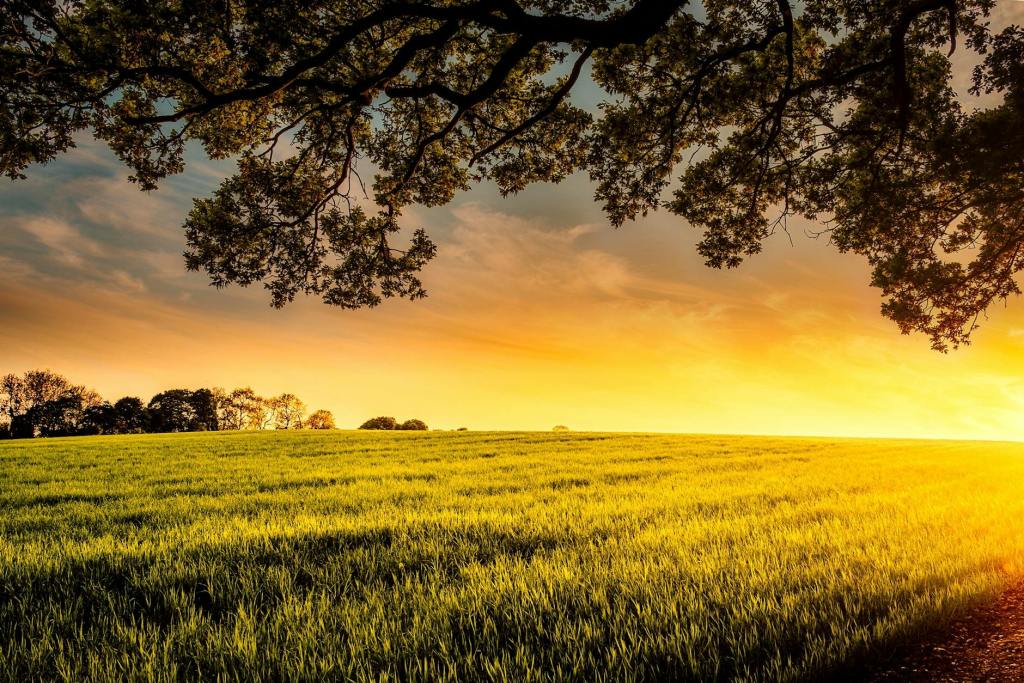
“Still other seed fell on good soil. It came up, grew and produced a crop, some multiplying thirty, some sixty, some a hundred times.”
—Mark 4:8
Jesus often used agricultural imagery to reveal deep spiritual truths. One of His most well-known parables—the parable of the sower—describes a farmer scattering seed, which falls on different types of ground. Some seed is eaten by birds. Some springs up quickly but withers in shallow soil. Some is choked by thorns. But some falls on good soil and bears abundant fruit.
For many Christians, the takeaway is straightforward: the condition of the heart determines the fruitfulness of the Word. That is absolutely true.
But if we stop there, we may miss something just as important.
Because in Jesus’ day—and even more so today—a good farmer doesn’t just accept the soil as-is. A good farmer works the ground. Removes the weeds. Protects the seed. Tests and improves the soil. A good farmer knows that fruitfulness can be increased by faithfulness.
So what if we didn’t just hope the Word finds good soil in us or in others?
What if we began cultivating the kind of environment where growth is more likely?
What if we looked to the farmer—not just the parable?
The Word Is the Seed, but the Soil Still Matters
Jesus is clear: the seed is the Word of God (Luke 8:11). The seed itself is perfect. It’s not defective. It carries divine potential.
But even a perfect seed cannot bear fruit in poor soil.
The effectiveness of the Word is not limited by the power of the Word, but by the receptivity of the heart. And that’s where our role begins—not as the seed, but as those who prepare the ground.
Modern Farmers Know: Healthy Soil Doesn’t Happen by Accident
Farmers today don’t simply hope their fields produce. They test the soil for nutrients. They analyze pH levels. They rotate crops to avoid depletion. They remove rocks. They add fertilizer. They protect young plants from pests and drought.
And what does this mean for us as believers?
It means we can’t be passive about fruitfulness.
If the Word of God is going to produce a harvest in our lives—or in the lives of those we’re called to disciple—we must take part in the holy work of cultivation.
Preparing the Soil of Our Hearts
Here are a few ways we can “farm” our hearts so the Word of God takes deeper root:
1. Break Up the Fallow Ground
“Break up your unplowed ground, and do not sow among thorns.” —Jeremiah 4:3
Some areas of our lives have become hardened by pain, pride, or neglect. Before the seed takes root, the ground must be broken. This happens through repentance, humility, and the softening work of the Holy Spirit.
Don’t resist the plow. Let God turn over the soil of your heart.
2. Remove the Rocks
In Jesus’ parable, rocky soil represents shallow faith—where the Word is received with joy but fades under pressure or persecution.
Ask yourself:
- Are there unresolved doubts I’ve ignored?
- Are there wounds or offenses blocking my growth?
- Am I avoiding depth for the sake of comfort?
Removing rocks requires effort. But the deeper the soil, the greater the harvest.
3. Pull the Weeds
Weeds don’t need to be planted—they grow on their own. Jesus said thorns represent the worries of life, the deceitfulness of riches, and the desires for other things (Mark 4:19).
These don’t always look like sin. Sometimes, they’re distractions. Good things that have grown out of place.
We must be ruthless with the weeds, because they choke the Word. We can’t entertain both full devotion and divided attention.
Protecting What’s Been Sown
Modern farmers use fencing, netting, pesticides, and scarecrows to protect what’s growing. They don’t just sow and walk away. They monitor. They defend.
Likewise, we must protect the Word God plants in us.
- Guard your heart from cynicism and doubt.
- Stay away from influences that devalue Scripture.
- Surround yourself with people who water your faith—not wither it.
Don’t underestimate how quickly the enemy would love to snatch away what God is planting in you.
Sowing Into Others With Intentionality
Now flip the lens. What if you’re not just the soil—but also the sower?
We all have people in our lives we long to reach with the Word—children, friends, coworkers, spouses, students, neighbors.
How can we increase the effectiveness of the seed we sow?
- Know the soil. What’s their background? Wounds? Questions?
- Pray before planting. The Holy Spirit prepares hearts better than we can.
- Be patient. Some seed takes time to break through.
- Follow up. Keep watering. Keep showing up. Keep loving.
Jesus gave us the parable, not so we’d judge who is “good soil” or not—but so we’d learn to sow generously and wisely, trusting that some will bear fruit.
God Gives the Growth, but We Steward the Field
Paul said it beautifully in 1 Corinthians 3:6:
“I planted the seed, Apollos watered it, but God has been making it grow.”
We don’t control the harvest. But we do plant, water, and weed.
We prepare the soil of our hearts.
We sow the Word with compassion.
We tend the field with prayer and perseverance.
And God—faithful and generous—brings the increase.
Conclusion: Don’t Just Hope for a Harvest—Prepare for One
You don’t need to be a theologian to sow the Word.
You don’t need to be a perfect Christian to prepare your heart.
You just need to be faithful—like a farmer.
So ask yourself:
- What soil has God entrusted to me?
- What weeds need to be pulled?
- What rocks must be removed?
- What seeds am I sowing—and am I protecting them?
The Word of God is powerful. The soil can be cultivated.
The birds, the rocks, and the weeds can be addressed.
And the harvest?
It just might be more abundant than you imagined.
So look to the farmer.
Work the soil.
And trust the Lord of the harvest to do what only He can.
 sethmglazier.com
Leave a comment